

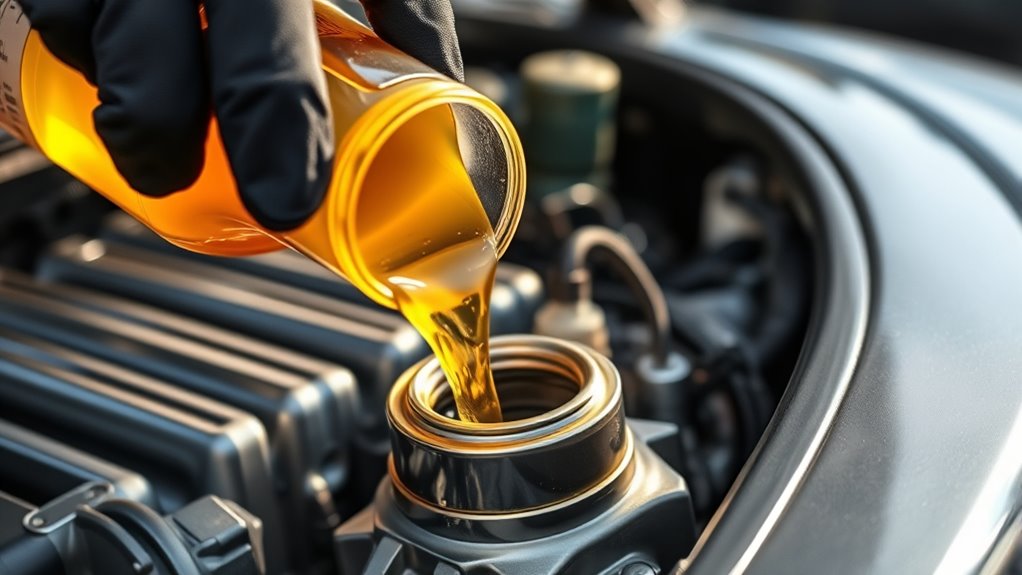
To safely add oil to a hot engine, make certain the engine is off and has cooled slightly to avoid splattering and burns. Use gloves, a funnel, and a clean rag to prevent spills and protect skin.
Loosen the oil cap slowly to release pressure safely.
Add oil gradually, avoiding overfilling, and monitor for leaks or unusual engine behavior afterward.
Proper timing and precautions minimize damage and injury.
Further details outline tools, steps, and post-addition checks for maximum safety.
Why Avoid Adding Oil to a Running Engine?
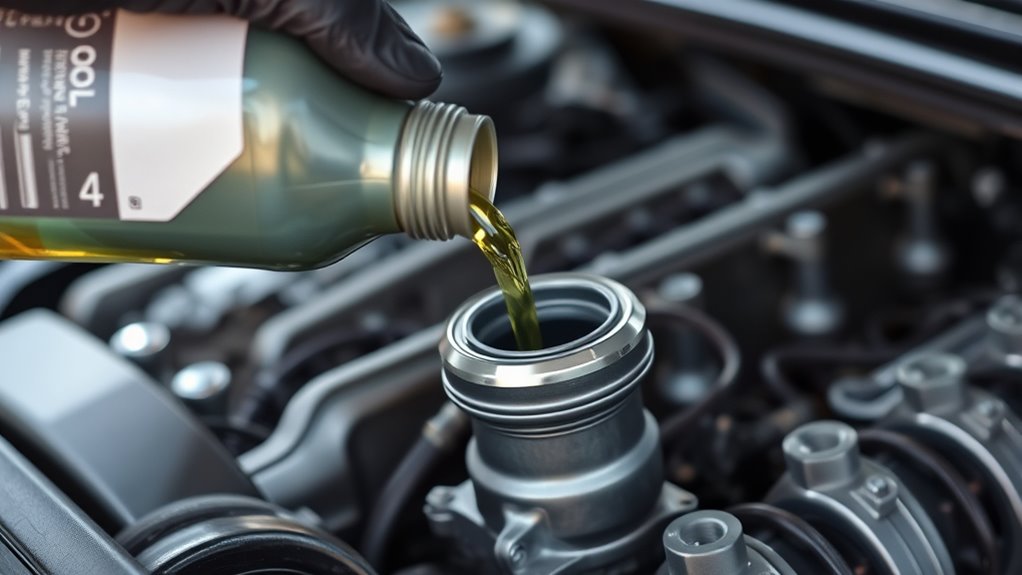
Although it may seem convenient, adding oil to a running engine poses safety risks and potential mechanical damage. Introducing oil while the engine is active can cause splattering, resulting in burns or injury. Mechanically, the oil system operates under pressure during engine operation, and adding oil at this time may disrupt proper circulation. This interference can lead to inconsistent lubrication, increased wear on engine components, and possible damage to seals. Additionally, the engine’s moving parts generate heat and turbulence, which can cause oil to foam if added while running. Foamy oil reduces its ability to lubricate effectively, accelerating engine wear. For these reasons, adding oil should be done only when the engine is off and has cooled sufficiently to guarantee safety and proper function.
How to Check Your Engine Oil Level Safely
Before adding oil, it is crucial to accurately check the engine oil level to determine if additional oil is necessary. The vehicle should be parked on a level surface with the engine turned off and cooled for several minutes to allow oil to settle. The dipstick, typically marked with a bright handle, must be removed, wiped clean with a lint-free cloth, and fully reinserted. After withdrawing the dipstick again, the oil level is observed between the minimum and maximum markers. If the level is below the recommended range, adding oil is warranted. Additionally, the oil’s color and consistency should be inspected for signs of contamination or degradation. Following this procedure guarantees a reliable assessment of oil needs before proceeding with further maintenance steps.
When to Add Engine Oil to a Hot Engine?
After determining that the engine oil level is below the recommended range, the next consideration is whether it is safe to add oil while the engine is hot. Generally, it is acceptable to add oil when the engine has been turned off but remains warm, as the oil will flow more smoothly and settle quickly. However, adding oil immediately after shutting down can pose a burn risk due to hot engine components. It is advisable to wait a few minutes to allow the engine to cool slightly before opening the oil filler cap. Avoid adding oil when the engine is running, as this can cause overfilling or splashing, potentially leading to inaccurate readings or safety hazards. Timing guarantees safety and accuracy when topping off engine oil.
What Tools You Need Before Adding Engine Oil
A few essential tools are required to add engine oil safely and effectively. Preparing these items beforehand guarantees a smooth process and minimizes risks associated with handling a hot engine. The proper tools also help maintain cleanliness and accuracy when adding oil. Key items include:
Essential tools ensure a safe, clean, and smooth process when adding engine oil.
- Gloves: Protect hands from hot surfaces and oil.
- Funnel: Prevent spills and direct oil precisely into the engine.
- Clean rag or paper towels: Wipe any accidental drips and clean the dipstick.
- Oil container with a spout: Provides controlled pouring and reduces mess.
Having these tools ready allows a person to add engine oil efficiently while maintaining safety and cleanliness, reducing the chance of injury or damage during the procedure.
Opening the Oil Cap Safely
How should one approach opening the oil cap on a hot engine to guarantee safety? First, it is essential to wear heat-resistant gloves to protect against burns. Next, the cap should be opened slowly to release any built-up pressure gradually, preventing hot oil or steam from escaping suddenly. Always use a clean cloth to avoid dirt contamination. Avoid leaning directly over the cap while opening.
| Step | Action | Safety Tip |
|---|---|---|
| 1 | Wear heat-resistant gloves | Prevent burns |
| 2 | Loosen cap slowly | Release pressure gradually |
| 3 | Use a cloth to grip the cap | Avoid slipping |
| 4 | Keep face away from cap | Prevent steam burns |
| 5 | Secure cap after inspection | Avoid leaks |
Step-by-Step Guide to Adding Engine Oil to a Hot Engine
Adding oil to a hot engine requires careful attention to safety precautions to prevent burns or spills. Using the proper tools, such as a funnel and heat-resistant gloves, guarantees a controlled and clean process. Following a step-by-step method helps maintain engine integrity while topping up oil efficiently.
Safety Precautions First
When approaching a hot engine, cautious preparation is essential to prevent injury and damage. Making certain safety begins with understanding the inherent risks of working around high temperatures and moving parts. Proper safety measures reduce the chances of burns, spills, and accidents.
Key safety precautions include:
- Allow the engine to cool slightly before opening the oil cap to avoid steam burns.
- Wear heat-resistant gloves to protect hands from hot surfaces.
- Keep a fire extinguisher nearby in case of oil ignition.
- Make certain the vehicle is parked on a flat, stable surface with the parking brake engaged.
Following these precautions helps maintain safety and ensures the oil addition process proceeds smoothly without harm or complications.
Proper Tools Needed
Ensuring safety measures are in place sets the foundation for a smooth oil addition process. The essential tools include a clean funnel, which prevents spills and directs oil precisely into the engine. A high-quality, heat-resistant glove protects the hand from burns caused by the hot engine surface. A flashlight can be useful for better visibility of the oil cap and dipstick, especially in low-light conditions. Additionally, having a clean rag or paper towels on hand helps wipe any accidental drips immediately, maintaining cleanliness. It is important to use oil that matches the vehicle manufacturer’s specifications, stored in a sealed container to avoid contamination. These tools collectively ensure the task is performed efficiently and safely without compromising engine integrity or personal safety.
Stepwise Oil Addition
How should one approach the task of introducing oil into a hot engine to maintain safety and efficiency? The process requires careful, measured steps to avoid injury and guarantee proper lubrication. First, the engine should be briefly allowed to cool down to reduce burn risk. Next, the oil cap must be removed carefully to release any built-up pressure. Then, using a funnel, oil should be added slowly to prevent spills and overfilling. Finally, the dipstick should be used to check the oil level, repeating the addition if necessary until the correct level is reached.
Key steps include:
- Allowing the engine to cool for a few minutes
- Removing the oil cap cautiously
- Adding oil gradually with a funnel
- Checking levels frequently with the dipstick
Preventing Oil Splatter When Pouring
Although adding oil to a hot engine is necessary for maintenance, preventing oil splatter during the process is crucial to avoid burns and engine damage. To minimize splatter, the oil should be poured slowly and steadily, allowing it to flow smoothly into the filler neck. Using a funnel can help control the flow and reduce the chance of oil spilling onto hot surfaces. Additionally, holding the container close to the filler opening limits the distance the oil falls, further decreasing splatter risk. It is important to avoid pouring oil too quickly or from a high position, as this increases turbulence and the likelihood of splashing. These precautions ensure a safer, cleaner addition of oil to a hot engine without compromising safety or engine integrity.
What to Do If You Spill Oil on a Hot Engine
If oil is accidentally spilled on a hot engine, prompt action is essential to prevent fire hazards and damage. The engine should be turned off immediately to reduce heat and the risk of ignition. After allowing the engine to cool down, clean the spilled oil thoroughly. Using absorbent materials like rags or paper towels can help remove excess oil. Avoid using water directly, as it can cause hot oil to splatter.
Key steps to follow include:
- Turn off the engine promptly to eliminate ignition risk.
- Allow the engine to cool before attempting cleanup.
- Use absorbent cloths or towels to soak up spilled oil.
- Dispose of used materials safely to prevent environmental contamination.
How to Monitor Engine Oil Level and Performance After Adding Oil
Once oil has been added to a hot engine, continuous monitoring of the oil level and performance becomes essential to guarantee proper lubrication and prevent potential damage. Regularly checking the dipstick ensures the oil remains at the recommended level. Observing engine temperature and unusual noises can help detect issues early. Additionally, inspecting for leaks or oil discoloration signals possible contamination or wear.
| Monitoring Aspect | What to Check |
|---|---|
| Oil Level | Use dipstick; ensure oil stays within recommended marks |
| Engine Performance | Listen for abnormal sounds; watch temperature gauge |
| Oil Condition | Look for leaks; check oil color and consistency |
This systematic approach aids in maintaining engine health after adding oil.
Frequently Asked Questions
What Type of Oil Is Best for High-Temperature Engines?
The best oil for high-temperature engines is synthetic oil with a high viscosity rating, such as 5W-40 or 10W-60. Synthetic oils provide superior thermal stability and oxidation resistance, ensuring excellent lubrication under extreme heat. They maintain viscosity at elevated temperatures, protecting engine components from wear and overheating. For optimal protection, high-performance or racing synthetic oils specially formulated for high-heat environments are recommended.
Can Adding Too Much Oil Damage My Engine?
Adding too much oil can seriously damage your engine. Excess oil increases pressure inside the engine, causing seal leaks and gasket failures. It can also foam, reducing lubrication and leading to engine component wear. Overfilling often results in poor engine performance and higher emissions. To avoid these issues, always maintain the oil level recommended by the manufacturer for optimal engine health and longevity.
How Often Should I Change My Engine Oil Completely?
Engine oil should be changed every 3,000 to 7,500 miles, depending on your vehicle’s manufacturer guidelines, driving conditions, and the type of oil used. Synthetic oils can extend oil change intervals up to 10,000 miles. Regular oil changes are essential to maintain engine performance and longevity by removing contaminants and reducing wear. For the best results, always follow the specific recommendations in your owner’s manual based on your engine model and driving habits.
Are Synthetic Oils Safer for Hot Engines?
Synthetic oils are safer for hot engines because they offer superior thermal stability and resist breakdown at high temperatures. They maintain consistent viscosity, ensuring reliable lubrication and reducing engine wear during extreme heat. Additionally, synthetic oils contain additives that protect against oxidation and sludge buildup caused by heat. Using synthetic oil improves engine performance and extends engine life in hot operating conditions.
What Are the Signs of Engine Oil Leaks?
Visible oil puddles under your parked vehicle are a clear sign of engine oil leaks. Other common indicators include a burning oil smell, blue smoke from the exhaust, and consistently low oil levels even after regular refills. Additionally, the dashboard oil warning light may turn on, signaling low oil pressure. These symptoms often point to damaged seals, gaskets, or an oil pan, requiring immediate inspection to avoid engine damage.
Conclusion
Adding oil to a hot engine is like tending a simmering pot. Delicate care guarantees smooth operation without splashes or burns. Approaching this task with caution and the right tools transforms a potential hazard into a seamless ritual.
Just as a gardener nurtures fragile blooms, a driver must monitor oil levels vigilantly, guaranteeing the engine’s heart continues to beat strong and steady. In this dance of heat and fluid, patience and precision are the keys to lasting performance.