

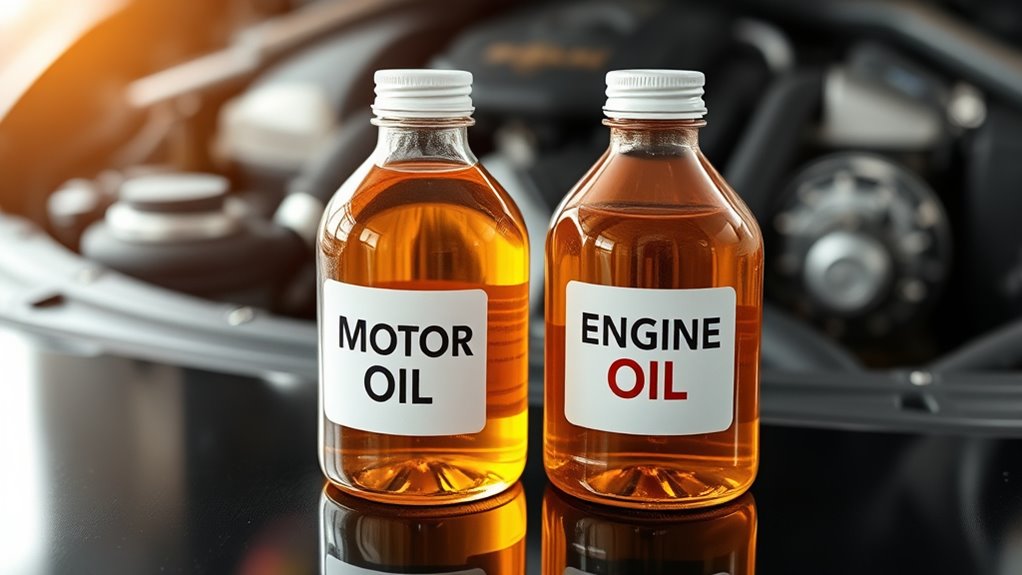
Motor oil and engine oil refer to lubricants that reduce friction, wear, and heat in internal combustion engines.
While “motor oil” commonly describes automotive lubricants, “engine oil” applies broadly to various engine types.
Both share the same composition and primary functions, including corrosion prevention and maintaining viscosity.
The terms are often used interchangeably with no significant difference in quality or purpose.
Understanding their similarities and differences, as well as proper selection and maintenance, is essential for best engine performance and longevity.
What Are Motor Oil and Engine Oil?

What distinguishes motor oil from engine oil is often a matter of terminology rather than function. Both terms refer to lubricants used to reduce friction, wear, and heat within internal combustion engines. These oils guarantee smooth operation by forming a protective film between moving parts. Motor oil typically denotes the lubricant used in automotive engines, while engine oil can apply more broadly to lubricants for various engine types, including motorcycles, boats, and industrial machinery. Composed mainly of base oils and additives, these oils enhance performance by preventing corrosion, cleaning engine components, and maintaining viscosity under different temperatures. Regardless of the label, their primary role remains consistent: to protect the engine, optimize efficiency, and extend its operational lifespan through effective lubrication and heat dissipation.
Is Motor Oil the Same as Engine Oil?
Although motor oil and engine oil are often used interchangeably, subtle distinctions can arise depending on context and application. Generally, both terms refer to the same lubricant designed to reduce friction and wear within an internal combustion engine. Motor oil is a broader term commonly used in everyday language, while engine oil specifically emphasizes its function within engines. In practical terms, no difference exists in the product itself; both consist of base oils and additives formulated to protect engine components. The choice of terminology may vary by region, industry, or documentation style, but this does not imply a difference in composition or purpose. Consequently, motor oil and engine oil can be considered synonymous in most automotive contexts, serving the essential role of maintaining engine performance and longevity.
How to Choose the Right Motor or Engine Oil for Your Vehicle
Selecting the appropriate motor or engine oil for a vehicle requires careful consideration of several factors, including the manufacturer’s specifications, oil viscosity, and driving conditions. Vehicle manuals provide essential guidelines on oil types and viscosity grades suitable for the engine. Choosing oil that meets these standards guarantees maximum performance and protection. Viscosity, indicated by numbers such as 5W-30, reflects the oil’s thickness and flow at various temperatures, affecting engine lubrication. Additionally, synthetic oils often offer better stability and protection under extreme conditions compared to conventional oils. Driving habits and environment—such as frequent short trips, extreme temperatures, or heavy towing—also influence oil choice. Ultimately, selecting the right oil involves balancing these elements to maintain engine longevity and efficiency.
Common Myths About Motor and Engine Oil
Understanding how to choose the right motor or engine oil often involves steering a mix of facts and misconceptions. One common myth is that motor oil and engine oil are entirely different products; in reality, both terms refer to the same lubricant used to protect and enhance engine performance. Another misconception is that thicker oil always offers better protection, but viscosity must align with manufacturer specifications to guarantee ideal function. Some believe synthetic oils damage older engines, yet synthetics often provide superior protection regardless of engine age. Additionally, the idea that oil changes are only necessary when the oil looks dirty is false; oil deteriorates over time and usage, making regular changes indispensable. Dispelling these myths is vital for informed oil selection and vehicle care.
Why Proper Motor and Engine Oil Maintenance Matters
Because motor and engine oil serves as the primary lubricant and coolant for internal engine components, maintaining its quality and proper levels is essential to prevent wear and overheating. Neglecting oil maintenance can lead to engine damage, reduced performance, and expensive repairs. Regular oil changes and monitoring guarantee the engine runs smoothly, prolonging its lifespan. Proper maintenance also improves fuel efficiency and reduces harmful emissions, contributing to environmental protection.
Maintaining quality motor oil prevents engine wear, enhances performance, and supports environmental health.
- Experiencing unexpected engine failure can cause stress and financial strain.
- A well-maintained engine offers peace of mind during daily commutes and long trips.
- Protecting the vehicle’s heart preserves its value and reliability over time.
Frequently Asked Questions
Can Motor Oil Be Used in Motorcycles and Cars Interchangeably?
Motor oil for motorcycles and cars is not always interchangeable due to different engine requirements. Motorcycle oils contain special additives to protect the clutch and withstand higher RPMs, which car oils often lack. Using car motor oil in motorcycles can lead to clutch slippage and insufficient engine protection. For optimal engine performance and longevity, always use motor oil specifically formulated for your vehicle type.
How Often Should You Change Synthetic Versus Conventional Engine Oil?
Synthetic engine oil should generally be changed every 7,500 to 10,000 miles due to its superior durability and resistance to breakdown. In contrast, conventional engine oil requires more frequent changes, typically every 3,000 to 5,000 miles. These recommended intervals can vary depending on driving conditions and your vehicle manufacturer’s guidelines, so always consult your owner’s manual for the best maintenance schedule.
What Environmental Impact Does Improper Motor Oil Disposal Have?
Improper motor oil disposal severely harms the environment by contaminating soil and water sources. Toxic chemicals in used oil can seep into groundwater, threatening ecosystems and human health. It also endangers aquatic life by reducing oxygen levels in water bodies. Furthermore, improper disposal leads to pollution and waste buildup. To protect the environment, it is crucial to follow responsible recycling and disposal methods for used motor oil.
Are There Any Health Risks Associated With Handling Motor Oil?
Handling motor oil can pose several health risks. Prolonged skin contact may cause irritation, dermatitis, or allergic reactions due to toxic additives and contaminants. Inhaling motor oil fumes can lead to respiratory problems, dizziness, or headaches. Accidental ingestion or exposure to used motor oil increases the risk of serious health issues because it contains harmful carcinogens. To minimize these risks, always use proper protective gear such as gloves and work in well-ventilated areas.
Can Using the Wrong Oil Void My Vehicle’s Warranty?
Using the wrong oil can void your vehicle’s warranty if it causes engine damage or doesn’t meet the manufacturer’s specifications. Automakers specify certain oil types and grades to ensure optimal engine performance and durability. Ignoring these requirements may lead to denied warranty claims. Always consult your owner’s manual and use the recommended oil to keep your warranty valid and protect your engine.
Conclusion
In summation, selecting suitable synthetic or standard solutions greatly supports smooth engine functioning. Both motor oil and engine oil serve similar purposes, safeguarding systems from sludge and stress.
Sensible selection, steadfast substitution, and scrupulous scrutiny ensure efficient engine endurance. Dispelling doubts and debunking damaging myths delivers dependable direction.
Ultimately, ideal oil upkeep offers ongoing operational opportunities, promoting peak performance and prolonging powerplant productivity with purposeful precision.