


Transmission fluid and engine oil are different lubricants designed for distinct vehicle systems. Transmission fluid is typically red or pink, translucent, and thinner, while engine oil ranges from amber to dark brown and is thicker.
Each fluid has unique additives suited to its function. Engine oil lubricates and cools the engine, while transmission fluid enables smooth gear shifts and hydraulic action. Using the wrong fluid can cause serious damage.
Further explanation reveals why these differences matter for proper maintenance.
Is Transmission Fluid the Same as Engine Oil?
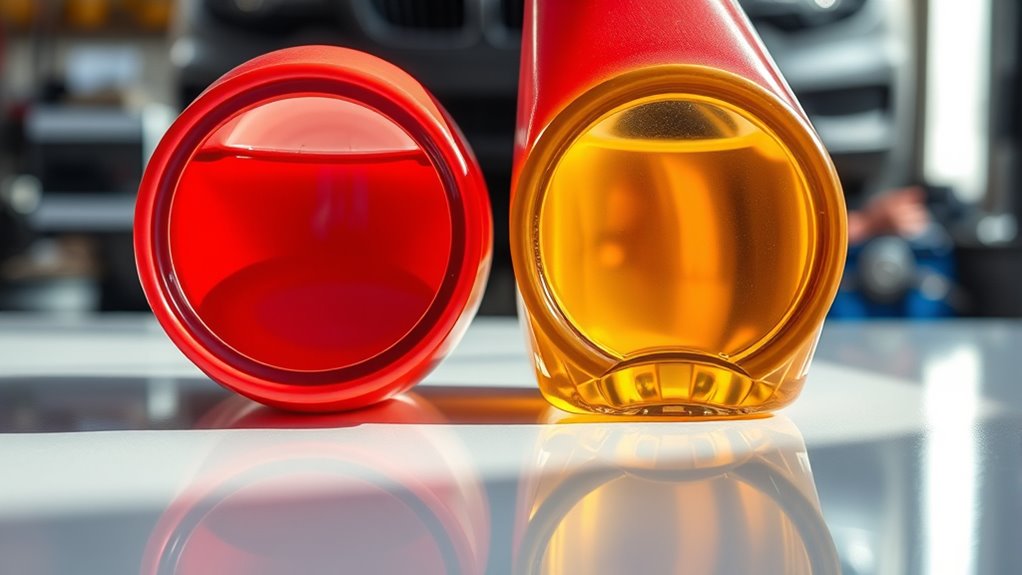
Transmission fluid and engine oil serve distinct functions within a vehicle’s mechanical system and are formulated differently to meet those specific needs. Engine oil primarily lubricates the engine’s internal components, reducing friction and wear while also aiding in cooling and contamination control. Transmission fluid, on the other hand, is designed to lubricate transmission components, facilitate smooth gear shifts, and act as a hydraulic fluid in automatic transmissions. The chemical composition of each fluid reflects these roles: engine oil often contains additives to withstand high temperatures and combustion byproducts, whereas transmission fluid includes friction modifiers to optimize clutch engagement and transmission performance. Despite both being lubricants, transmission fluid and engine oil are not interchangeable due to their differing properties and specific performance requirements within the vehicle.
What Is Transmission Fluid and How Does It Work
How does this fluid contribute to a vehicle’s operation? Transmission fluid serves multiple critical roles within a vehicle’s transmission system. Primarily, it lubricates moving parts to reduce friction and wear, ensuring smooth gear shifts. Additionally, transmission fluid acts as a hydraulic fluid, enabling the transmission to transfer power from the engine to the wheels efficiently. It also helps to cool the transmission by dissipating heat generated during operation. This fluid is specially formulated to withstand high temperatures and pressure conditions unique to transmissions. Without proper transmission fluid, the transmission components would experience premature wear, overheating, and potential failure, severely affecting vehicle performance and longevity. *Therefore*, transmission fluid is essential for both mechanical function and thermal management within the transmission system.
What Is Engine Oil and Why Is It Important
Why is engine oil essential for a vehicle’s operation? Engine oil serves as a lubricant, reducing friction between moving parts within the engine. This minimizes wear and tear, prolonging engine life. Additionally, engine oil helps dissipate heat generated during combustion, preventing overheating. It also cleans the engine by carrying away dirt, metal particles, and combustion byproducts, which are then trapped by the oil filter. Moreover, engine oil forms a seal between piston rings and cylinder walls, ensuring ideal compression and efficiency. Without proper lubrication and cooling, engine components would suffer damage, leading to costly repairs or failure. Thus, engine oil plays a critical role in maintaining engine performance, reliability, and longevity. It must meet specific viscosity and additive requirements tailored to the engine’s design and operating conditions.
How Transmission Fluid and Engine Oil Work Differently
Transmission fluid and engine oil both serve as lubricants but target different components within a vehicle. Engine oil primarily reduces friction among engine parts and helps dissipate heat generated during combustion. In contrast, transmission fluid not only lubricates moving parts within the transmission but also manages heat and facilitates hydraulic functions essential for gear shifting.
Lubrication Roles Compared
Although both fluids serve to reduce friction and wear, engine oil primarily lubricates the internal components of the engine, such as pistons, crankshafts, and camshafts, while transmission fluid is designed to lubricate and cool the gears and clutches within the transmission system. Engine oil forms a protective film that prevents metal-to-metal contact under high pressure and varying temperatures. It also aids in cleaning and protecting engine parts from corrosion. Transmission fluid, on the other hand, must maintain consistent viscosity to ensure smooth gear shifts and prevent clutch slippage. Its formulation includes additives that enable proper hydraulic function and friction modification, which are essential for transmission performance. These distinct lubrication roles highlight why engine oil and transmission fluid are not interchangeable despite some superficial similarities.
Heat Management Differences
The distinct functions of engine oil and transmission fluid extend beyond lubrication to their roles in managing heat within their respective systems. Engine oil absorbs and dissipates heat generated by combustion and friction among engine components, helping to maintain ideal operating temperatures. It circulates through passages to transfer heat away from critical areas, preventing overheating. Transmission fluid, however, primarily manages heat produced by the friction and hydraulic pressure inside the transmission. It cools transmission components by circulating through a dedicated cooler, often integrated with the radiator, ensuring smooth gear shifts and preventing thermal breakdown. While both fluids aid heat management, their formulations and circulation methods are tailored to the unique thermal demands of engines and transmissions, reflecting their specialized functions within a vehicle’s mechanical systems.
Risks of Using the Wrong Fluid in Your Vehicle
Using the incorrect fluid can lead to severe engine damage, compromising lubrication and causing overheating. Transmission performance may also suffer, resulting in shifting problems and increased wear. Understanding these risks highlights the importance of choosing the proper fluid for each system.
Engine Damage Consequences
If incorrect fluid is introduced into a vehicle’s system, significant engine damage can quickly result. Transmission fluid and engine oil have distinct chemical compositions and additives tailored to their specific functions. Using transmission fluid in an engine can lead to inadequate lubrication, causing increased friction and wear on engine components. Over time, this can result in overheating, accelerated engine part degradation, and potential seizure. Additionally, the improper fluid may not provide necessary protection against corrosion or contaminants, further compromising engine integrity. This misuse can void warranties and lead to costly repairs or even complete engine replacement. It is essential to use the correct fluid type specified by the manufacturer to maintain engine health and avoid irreversible damage caused by incompatible fluids.
Transmission Performance Issues
How does the introduction of incorrect fluid impact transmission performance? Using the wrong fluid in a vehicle’s transmission can lead to significant performance problems. Transmission fluids are specially formulated to provide specific lubrication, friction characteristics, and heat resistance. When an incorrect fluid is used, it may fail to maintain proper hydraulic pressure or adequately lubricate moving parts. This can cause slipping gears, delayed or harsh shifting, and increased wear on components. Over time, these issues may escalate to overheating and transmission failure. Additionally, improper fluid can degrade seals and gaskets, leading to leaks. Consequently, ensuring the correct transmission fluid is essential to maintain ideal performance, prevent costly repairs, and extend the transmission’s lifespan. Misidentifying transmission fluid as engine oil poses a substantial risk to vehicle function.
How to Easily Identify Transmission Fluid and Engine Oil
A simple visual and tactile inspection can often distinguish transmission fluid from engine oil. Transmission fluid typically has a bright red or pink hue, while engine oil ranges from amber to dark brown or black, depending on usage and age. When fresh, transmission fluid is translucent with a slightly oily texture, whereas engine oil is thicker and more viscous. Additionally, transmission fluid usually has a sweeter or more chemical scent, contrasting with the more neutral or burnt odor of engine oil. By observing these color, consistency, and scent differences, one can reliably differentiate between the two fluids without specialized tools. This straightforward approach aids in preventing fluid mix-ups that could lead to mechanical issues.
When and How to Check Transmission and Engine Oil Levels
Transmission and engine oil levels should be checked at specific intervals to guarantee proper vehicle performance. Typically, engine oil is measured when the engine is cold, while transmission fluid is checked with the engine warm and running. Accurate measurement techniques, including using the correct dipstick and reading fluid levels on a flat surface, are essential for reliable results.
Optimal Checking Times
Although both fluids are essential for vehicle performance, checking their levels requires attention to timing and procedure to guarantee accurate readings. Transmission fluid and engine oil have different optimal checking conditions due to their distinct functions and operating temperatures. Accurate assessment prevents misinterpretation of fluid status, avoiding potential damage.
- Engine oil is best checked when the engine is warm but turned off for several minutes to allow oil to settle.
- Transmission fluid should be checked with the engine running at operating temperature and the vehicle on level ground.
- Both fluids require a stable, flat surface to avoid skewed readings.
- Ambient temperature affects fluid viscosity; checking during moderate temperatures ensures consistent results.
Adhering to these timing guidelines promotes reliable maintenance and vehicle longevity.
Proper Measurement Techniques
Proper measurement techniques guarantee accurate assessment of both transmission fluid and engine oil levels, which is essential for maintaining vehicle health. Checking engine oil typically requires the engine to be off and cool, using the dipstick to measure fluid level on a flat surface. Transmission fluid often demands the engine to be running and the transmission warmed up for an accurate reading. Cleaning the dipstick before reinsertion prevents false readings. The table below summarizes these key points:
| Fluid Type | Engine Condition | Measurement Tip |
|---|---|---|
| Engine Oil | Engine off, cool | Check on level ground |
| Transmission Fluid | Engine running, warm | Shift through gears before checking |
| Both | Use clean rag | Wipe dipstick before reinsertion |
Choosing the Right Fluid for Your Vehicle’s Transmission and Engine
When selecting fluids for a vehicle, understanding the distinct functions of transmission fluid and engine oil is essential to maintaining peak performance. Each fluid is formulated to address specific mechanical needs—engine oil lubricates and cools engine components, while transmission fluid facilitates gear shifting and protects transmission parts. Choosing the correct fluid involves:
Understanding the unique roles of engine oil and transmission fluid is key to optimal vehicle performance.
- Consulting the vehicle manufacturer’s specifications to confirm compatibility.
- Differentiating between types of transmission fluids (e.g., ATF, CVT fluid) and engine oils (e.g., synthetic, conventional).
- Considering operating conditions such as temperature and load, which influence fluid performance requirements.
- Using fluids that meet industry standards and certifications to guarantee protection and efficiency.
Proper fluid selection prevents premature wear and maintains the vehicle’s reliability and longevity.
Common Myths About Transmission Fluid and Engine Oil
Since transmission fluid and engine oil serve different purposes, misconceptions about their interchangeability persist among vehicle owners. Many believe that because both fluids are lubricants, they can be swapped without issue. Others assume their colors indicate similarity, or that one fluid can extend the life of the other. These myths can lead to improper maintenance and mechanical failures.
| Myth | Reality |
|---|---|
| Both fluids are interchangeable | Each fluid is formulated for specific functions |
| Transmission fluid is just colored engine oil | Different additives and base oils are used |
| Color indicates fluid type | Color varies by manufacturer and type |
| Mixing fluids improves performance | Mixing can cause damage and reduce effectiveness |
| Transmission fluid lasts longer than engine oil | Lifespan depends on fluid type and usage |
Tips for Maintaining Your Vehicle by Managing Both Fluids
Although transmission fluid and engine oil have distinct roles, effective vehicle maintenance requires careful attention to both. Proper management guarantees ideal performance and longevity of the vehicle’s systems.
Key tips include:
- Regularly check fluid levels using appropriate dipsticks to prevent damage caused by low fluid.
- Replace fluids at manufacturer-recommended intervals to maintain lubrication and cooling properties.
- Use the correct type of fluid specified for the vehicle to avoid chemical incompatibility and system malfunctions.
- Inspect for leaks and unusual fluid color or odor changes, which may signal underlying mechanical issues.
Consistent adherence to these practices supports efficient engine and transmission function, reducing repair costs and enhancing overall vehicle reliability.
Frequently Asked Questions
Can Transmission Fluid Affect Fuel Efficiency?
Transmission fluid can impact fuel efficiency indirectly. When transmission fluid is old or of low quality, it increases friction and causes inefficient gear shifts, making the engine work harder and use more fuel. Maintaining clean, high-quality transmission fluid ensures smooth operation and optimal power transfer, which helps improve fuel economy. While transmission fluid doesn’t directly affect fuel consumption like engine oil or fuel additives, its condition plays a key role in overall vehicle efficiency.
How Often Should Transmission Fluid Be Replaced?
Transmission fluid should generally be replaced every 30,000 to 60,000 miles, depending on your vehicle model and driving habits. Delaying fluid changes increases the risk of transmission failure, with studies showing that 40% of vehicles with overdue replacements experience issues. Regularly changing the transmission fluid helps maintain optimal performance, prevents wear and overheating, and extends the lifespan of your transmission. Always follow your manufacturer’s guidelines and inspect the fluid condition regularly to avoid costly repairs and ensure smooth gear shifting.
What Are the Signs of Transmission Fluid Leaks?
Signs of transmission fluid leaks include red or brownish fluid spots under your vehicle, particularly near the transmission area. You might also notice a burning smell or an overheated transmission, which are common indicators of leaks. Difficulty shifting gears, slipping gears, or delayed gear engagement often result from low transmission fluid levels caused by leaks. Additionally, fluid stains on the driveway and a low transmission fluid level during inspection are clear signs of a transmission fluid leak.
Can Engine Oil Be Recycled or Reused?
Yes, engine oil can be recycled and reused, but not directly. Used engine oil is collected and refined to remove impurities, allowing it to be converted into base oil or fuel. This recycling process helps reduce environmental pollution and conserves natural resources. However, without proper treatment, used oil contains contaminants that can harm engine performance and cause damage, so it must be processed before reuse.
Does Synthetic Fluid Work Better for Transmissions?
Synthetic transmission fluid offers superior performance over conventional fluids thanks to enhanced thermal stability, oxidation resistance, and improved frictional properties. These benefits ensure consistent shifting, reduce wear, and extend transmission life, especially in extreme temperatures or under heavy loads. For optimal results, always follow manufacturer recommendations and verify compatibility with your transmission type. Using synthetic fluid improves efficiency and longevity while preventing damage when vehicle specifications are met.
Conclusion
Transmission fluid and engine oil, though often mistaken as twins, serve distinct roles in a vehicle’s intricate dance. Like two rivers flowing side by side, each nourishes different parts. Transmission fluid lubricates gears, while engine oil protects pistons.
Using the wrong fluid is akin to pouring saltwater into a freshwater stream, causing damage. Recognizing their unique functions guarantees a vehicle runs smoothly, preserving its heart and soul through proper care and maintenance.