

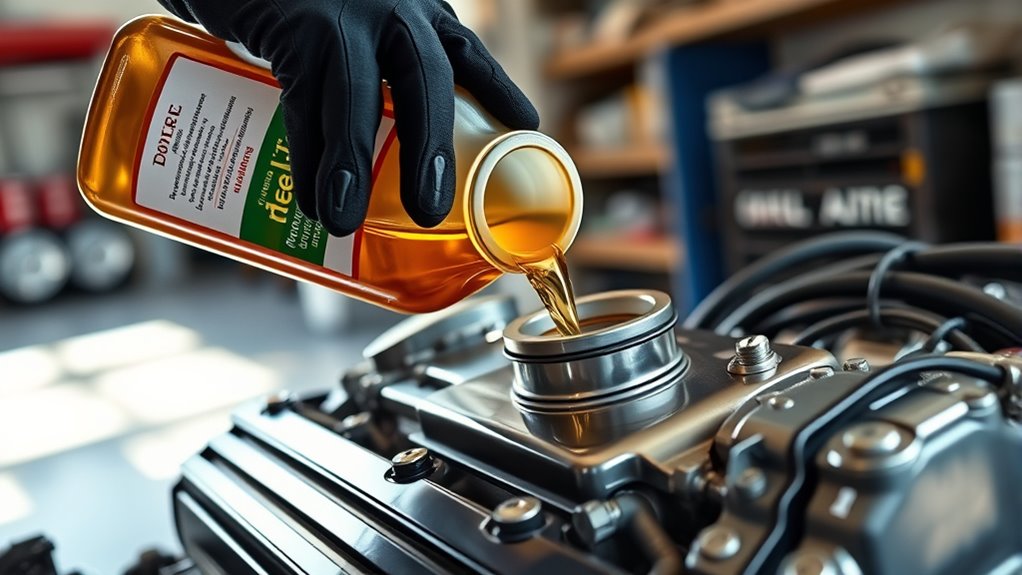
Diesel oil can be used safely in a gas engine by first verifying engine compatibility with manufacturer guidelines. It should be added when the engine is cool, using a clean funnel to avoid contamination.
Gradual addition while frequently checking oil levels guarantees proper lubrication without overfilling.
Diesel oil is typically reserved for temporary use in older or stressed engines. Monitoring for unusual signs and following recommended maintenance helps prevent damage.
Further details explain how to optimize performance and safety.
When and Why to Use Diesel Oil in a Gas Engine
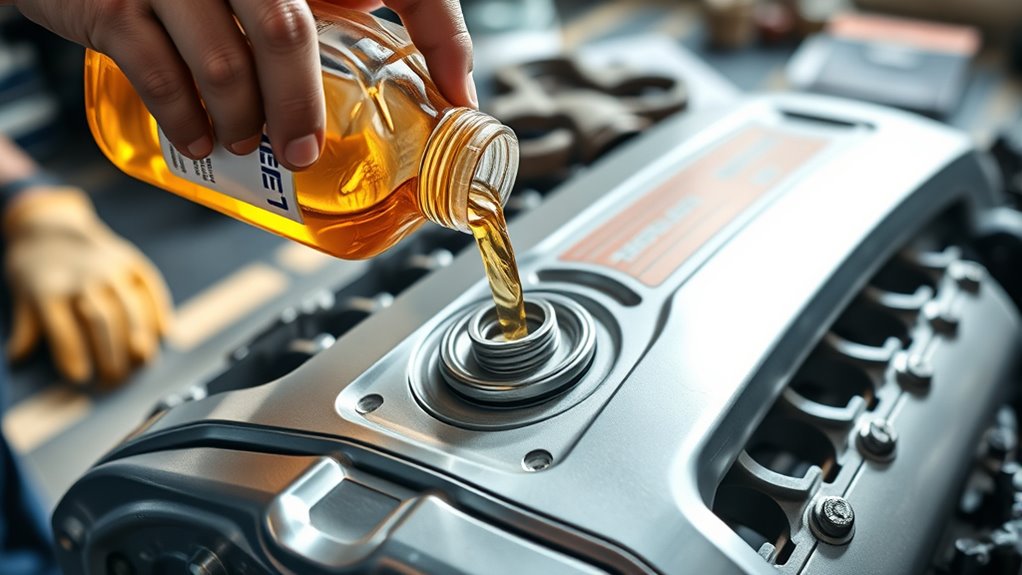
Although diesel oil is primarily formulated for diesel engines, it can occasionally be used in gas engines under specific circumstances. This typically occurs when diesel oil’s superior lubrication properties are needed to address issues such as excessive engine wear or when operating in harsh conditions that demand enhanced protection. Diesel oil’s higher viscosity and detergent additives can help maintain engine cleanliness and reduce friction in some gas engines, particularly older models or those experiencing performance degradation. However, this use is generally limited to emergency situations or temporary measures rather than routine maintenance. Users should consider engine design, manufacturer specifications, and the specific requirements of the gas engine before opting for diesel oil to guarantee compatibility and avoid potential damage.
Effects of Diesel Oil on Gas Engine Performance
Using diesel oil in gas engines can lead to a range of performance outcomes, influenced by differences in formulation and engine requirements. Diesel oils typically have higher detergency and wear protection additives, which can enhance engine durability under certain conditions. However, their viscosity and additive packages may differ from those tailored for gasoline engines, potentially affecting fuel efficiency and combustion quality. In some cases, using diesel oil may result in incomplete combustion, leading to carbon buildup or increased emissions. Conversely, certain diesel oils formulated with high-quality base stocks and balanced additives can provide adequate lubrication and reduce engine wear. Ultimately, the effects on performance depend on the compatibility between the diesel oil’s properties and the specific demands of the gas engine, emphasizing the importance of selecting appropriate products for ideal results.
How to Safely Add Diesel Oil to Your Gas Engine
When introducing diesel oil into a gasoline engine, what precautions guarantee both safety and ideal engine function? Strict adherence to proper procedures is essential. First, verify the engine’s compatibility with diesel oil to avoid damage. Next, ensure the engine is cool before adding oil to prevent burns and improper oil flow. Use a clean funnel to minimize contamination. Finally, add diesel oil gradually, monitoring levels closely to avoid overfilling, which can impair engine performance.
- Confirm compatibility with the vehicle’s manufacturer guidelines
- Allow the engine to cool prior to oil addition
- Utilize a clean funnel to prevent dirt introduction
- Pour diesel oil slowly while checking dipstick levels frequently
These steps help maintain engine integrity and promote safe use of diesel oil in gasoline engines.
Warning Signs Diesel Oil May Cause Engine Issues
If diesel oil is introduced improperly or in an incompatible engine, several warning signs may indicate potential damage or malfunction. Unusual exhaust smoke, reduced engine performance, and increased oil consumption are common indicators. Additionally, abnormal engine noises and overheating may occur as internal components struggle with improper lubrication. Early detection of these signs is vital to prevent severe engine damage.
| Warning Sign | Description | Possible Cause |
|---|---|---|
| Unusual Exhaust Smoke | Dark or excessive smoke from exhaust | Combustion issues or oil burning |
| Reduced Performance | Loss of power or sluggish response | Poor lubrication or clogging |
| Increased Oil Usage | Frequent need to top up oil | Oil breakdown or leakage |
| Overheating | Engine temperature rises unusually | Friction from inadequate lubrication |
Maintenance Tips to Prevent Damage After Using Diesel Oil
Although diesel oil can enhance engine performance when applied correctly, proper maintenance is essential to prevent long-term damage. Ensuring that the engine remains in ideal condition requires specific care practices following the use of diesel oil. Regular maintenance helps avoid issues such as deposits, sludge buildup, and premature wear. Key maintenance tips include:
- Change the oil and filter more frequently to remove contaminants.
- Inspect spark plugs and clean or replace them if fouled.
- Monitor the fuel system for deposits and clean injectors as needed.
- Use fuel additives designed for gasoline engines to improve combustion.
Adhering to these maintenance guidelines minimizes risks associated with diesel oil in gas engines, promoting durability and reliable performance over time.
Frequently Asked Questions
Can Diesel Oil Improve Fuel Efficiency in Gas Engines?
Diesel oil does not improve fuel efficiency in gas engines and is not recommended. Gas engines need lubricants specifically formulated for their combustion and operating conditions. Using diesel oil can cause poor lubrication, increased engine wear, and potential damage. For optimal fuel efficiency, always use manufacturer-recommended oils and maintain your engine properly instead of substituting with diesel oil.
Is Diesel Oil Compatible With Synthetic Motor Oils?
Diesel oil is generally not compatible with synthetic motor oils because they have different additive packages and base oil formulations. Mixing them can reduce lubrication efficiency and potentially cause engine damage. Synthetic oils are designed for specific performance needs, while diesel oils are formulated to meet the demands of diesel engines. To ensure optimal engine protection and longevity, it is best to avoid blending diesel oil with synthetic motor oils.
What Is the Environmental Impact of Using Diesel Oil in Gas Engines?
Using diesel oil in gas engines increases harmful emissions like unburned hydrocarbons and particulate matter due to formulation differences. This leads to inefficient combustion, higher environmental pollution, and potential engine damage from improper lubrication. To minimize environmental impact and maintain engine health, it is essential to use engine oils specifically designed for gas engines.
Can Diesel Oil Usage Void My Vehicle’s Warranty?
Using diesel oil in a gasoline engine can void your vehicle’s warranty. Manufacturers clearly specify the required oil type to ensure proper engine performance and protection. Using the wrong oil, such as diesel oil in a gas engine, may cause damage or improper lubrication. If engine issues occur, the manufacturer might deny warranty repairs due to incorrect oil use. To maintain warranty coverage, always follow the manufacturer’s oil recommendations precisely.
Are There Specific Brands of Diesel Oil Recommended for Gas Engines?
There are no specific diesel oil brands universally recommended for gas engines because diesel oils are formulated for diesel engine needs. However, some multi-grade oils meet both diesel and gasoline engine standards (such as API SN/CK-4 or higher). Always follow your vehicle manufacturer’s specifications and select oils that meet these standards to ensure proper lubrication and engine longevity. Brand choice is less important than compliance with the required performance ratings.
Conclusion
Using diesel oil in a gas engine requires a delicate balance, akin to steering uncharted waters with cautious respect. While it may offer temporary relief in specific scenarios, its presence can subtly alter the engine’s natural rhythm.
To guarantee smooth operation and avoid unexpected turbulence, careful application and vigilant maintenance are essential. By heeding gentle warnings and embracing preventive care, one can guide the engine through this nuanced experience without compromising its long-term vitality.